
 07933445988
Furniture Removal London: How to Get Rid of Unwanted Furniture Fast and Responsibly
Getting rid of old furniture in London is one of those tasks that sounds simple until you're actually standing in front of a three-seater sofa wondering how it's ever going to leave your flat. Whether you're clearing out after a move, a renovation, or simply making room for something new, Londoners face a unique set of challenges: narrow staircases, permit-only parking, strict council collection rules, and genuine concern about where their old furniture ends up.
This guide covers every realistic option available to London residents — from free community collections to same-day professional removal — with honest comparisons, cost breakdowns, and clear guidance on the most sustainable choices.
Quick Answer: What's the Best Way to Get Rid of Unwanted Furniture in London?
For most people, the best option depends on condition, urgency, and access.
- If your furniture is reusable and you can wait 1-2 weeks, charity collection is usually the cheapest and most eco-friendly route.
- If your furniture is damaged, heavy, or needs to go today, a licensed same-day furniture removal service is usually the fastest and safest choice.
- If budget is your top concern and timing is flexible, council bulky waste collection is often the lowest-cost paid option.
For old sofa collection in London, the same rule applies: donate if reusable, use licensed removal if damaged or urgent.
London Coverage and Access: What Changes the Price and Speed?
In London, furniture disposal speed and cost are heavily affected by practical access factors:
- Parking restrictions and controlled parking zones (CPZs)
- No-lift flats, narrow staircases, and basement access
- Distance from loading point to vehicle
- Item weight and dismantling requirements
Whether you're in a flat in Zone 1 or a house in outer London, these factors can change collection time and quote accuracy.
Why Getting Rid of Furniture in London Is More Complicated Than It Sounds
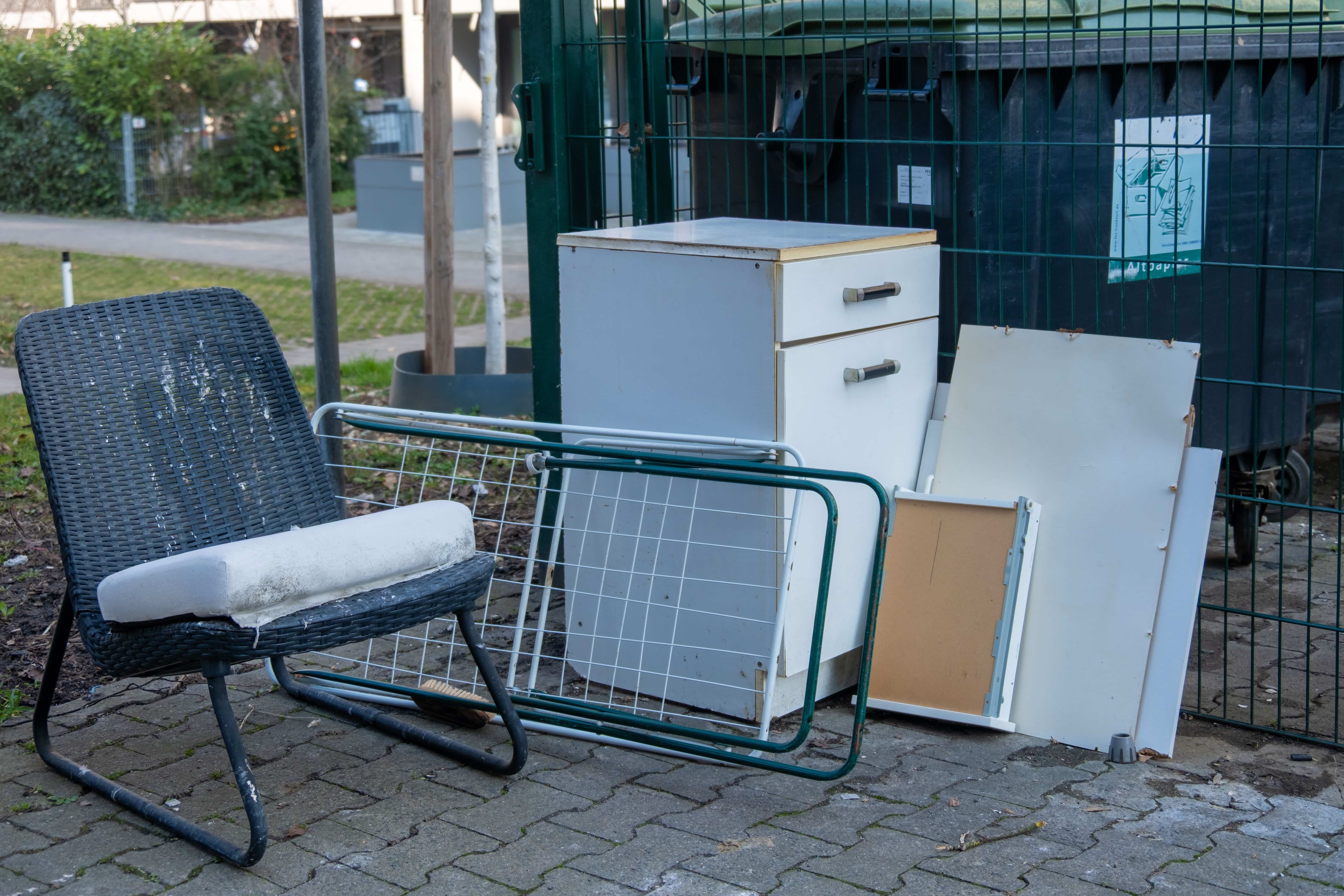
London's density creates logistical problems that don't exist in suburban or rural settings. A wardrobe that took three people to carry upstairs may be impossible to move solo. Many properties have no direct vehicle access. And leaving furniture on the pavement — something people assume is harmless — is actually illegal under the Environmental Protection Act 1990 and can result in a Fixed Penalty Notice of up to £400.
Beyond the legal risk, there's the environmental reality. According to the Furniture Reuse Network, the UK disposes of over 22 million pieces of furniture every year, a significant portion of which ends up in landfill despite being in reusable condition. In London alone, bulky waste constitutes one of the most common reasons residents contact their local council.
Understanding your options means you can move faster, spend less, and — if it matters to you — make the more responsible choice.
Your Complete Options for Furniture Removal in London
1. Council Bulky Waste Collection
What it is: Most London boroughs offer a bulky waste collection service where residents can book a scheduled pickup of large items including sofas, wardrobes, mattresses, and white goods.
Cost: Typically £20–£50 for one to three items, though some boroughs charge per item. A small number of boroughs still offer free collections for residents on certain benefits.
How to book: Contact your local council directly or use their online booking portal. Wait times vary significantly by borough — from a few days (in some outer London boroughs) to two to three weeks in busier areas.
Pros:
- Officially sanctioned and legally compliant
- Items may be passed to reuse charities before going to waste
- No need to transport furniture yourself
Cons:
- Can be slow, especially in central and inner London
- Limited to council-approved items and quantities
- You must present items at the kerbside on collection day
- Does not work if you have no direct pavement access
Best for: Residents with time to wait, standard-sized items, and easy kerbside access.
2. Charity Furniture Collection (Reuse First)
What it is: Charities like the British Heart Foundation, Emmaus, Freecycle, and local furniture reuse organisations offer free collection of furniture that is in good, sellable condition.
Cost: Free — some charities may even offer a small donation credit.
Key charities operating in London:
- British Heart Foundation Furniture & Electrical — free collection across most of London
- Emmaus UK — operates in several London communities
- Freecycle / Freegle — peer-to-peer platform; you list it, someone collects
Pros:
- Completely free
- Your furniture stays in use rather than going to landfill
- Supports charitable causes
Cons:
- Furniture must be in good, sellable condition (no stains, tears, or structural damage)
- Collection slots can take one to two weeks to arrange
- Not all items are accepted (some charities don't take mattresses, for example)
- Requires flexibility around their collection schedule
Best for: Furniture in excellent or good condition that you want to reuse responsibly and cost-free.
3. Selling or Giving Away Online
What it is: Listing your furniture on platforms like Facebook Marketplace, Gumtree, eBay, or Nextdoor to sell or give away locally.
Cost: Free to list; you may earn money from items in good condition.
Pros:
- Potentially profitable
- Fast if you're willing to price competitively
- Items go directly to someone who wants them
Cons:
- Requires managing enquiries, no-shows, and negotiations
- Buyer must collect (or you arrange delivery)
- Items in poor condition will not attract buyers
- Not suitable when you need items gone urgently
Best for: Furniture in good condition, sellers with time and patience, non-urgent situations.
4. Hiring a Man and Van
What it is: A driver with a van who will help load and transport your furniture to a tip, charity, or disposal facility. If you only need transport and lifting support, a professional man and van service can be a practical middle-ground option.
Cost: Typically £60–£150+ depending on distance, volume, and whether loading assistance is included.
Pros:
- Flexible and relatively fast to book
- Good for transporting items you've already sold or donated
Cons:
- May not include loading help
- No guarantee items are disposed of responsibly
- You may still need to pay tip fees on top of the hire cost
- Not always licensed waste carriers
Important: Always check that any van hire service holds a Waste Carrier Licence issued by the Environment Agency if they are transporting waste. Using an unlicensed carrier makes you legally liable if waste is fly-tipped.
5. Hiring a Skip
What it is: A skip placed outside your property for a set number of days, allowing you to dispose of furniture and other waste at your own pace.
Cost: £150–£350+ for a standard skip in London. A skip permit from your local council is required if the skip is placed on a public road (typically an additional £30–£80).
Pros:
- Good for large clear-outs involving multiple items
- Work at your own pace
Cons:
- Expensive and requires a permit for road placement
- Not all items are accepted (hazardous materials, for example)
- Overkill for one or two pieces of furniture
- Items in a skip go to waste rather than being reused
Best for: Full property clear-outs where volume is high and reuse is not the priority.
6. Professional Furniture Removal and Junk Removal Services
What it is: A specialist junk removal or furniture collection company that handles everything — from carrying items out of your property to responsible disposal, recycling, or donation.
Cost: Typically £60–£300+ depending on volume, access, and service provider. Most reputable services provide a no-obligation quote upfront.
Pros:
- Same-day or next-day availability in most London areas
- Full-service: loading, transport, disposal, and recycling handled for you
- No need to be present in some cases
- Responsible operators sort items for reuse and recycling
- Legally compliant — licensed waste carriers
- Works in flats, maisonettes, houses with narrow access
Cons:
- Higher cost than DIY options
- Quality varies between providers — always check for waste carrier certification
Best for: Busy Londoners, large or heavy items, urgent timescales, flats with no lift access, and anyone who values a genuinely hassle-free solution.
Junk Removal London's specialist junk removal service offers fast, fully-licensed furniture removal across all London boroughs. Items are sorted for reuse and recycling wherever possible — keeping your unwanted furniture out of landfill. See same-day availability.
Eco-Friendly Furniture Disposal: What Actually Happens to Your Old Furniture?
If sustainability matters to you, it's worth understanding what each option actually achieves environmentally.
| Disposal Method | Landfill Risk | Reuse Potential | Carbon Impact |
|---|---|---|---|
| Council bulky waste | Medium (varies by borough) | Some (if passed to charity) | Low–Medium |
| Charity collection | Very Low | High | Low |
| Online selling/Freecycle | Very Low | High | Very Low |
| Skip hire | High | Low | High |
| Man and van (unverified) | High | Low | Medium–High |
| Licensed junk removal | Low (if responsible operator) | Medium–High | Low–Medium |
The most eco-friendly options are charity collection and online giving away — but these only work when furniture is in good condition and you have time to wait. When speed and convenience are priorities, a licensed junk removal company that actively sorts for reuse and recycling is your next best option.
How to Choose the Right Option: A Decision Guide
Use this quick checklist to identify your best route:
- Furniture in good condition + you have 1–2 weeks: → Charity collection or online listing
- Furniture in poor condition + urgent timeline: → Licensed junk removal service
- Large full property clear-out: → Junk removal or skip (with permit)
- Budget is the top priority + you can wait: → Council bulky waste collection (or compare with private bulky waste collection)
- You want maximum environmental benefit: → Charity donation or Freecycle
- Need same-day or next-day removal: → Professional junk removal company
What NOT to Do When Disposing of Furniture in London
Avoid these common mistakes that can result in fines, legal liability, or environmental harm:
❌ Leaving furniture on the pavement without a collection booking — This is fly-tipping and carries fines of up to £400 or even prosecution.
❌ Using an unlicensed waste carrier — If they dump your furniture illegally, you can be held jointly responsible.
❌ Assuming all "junk removal" companies dispose responsibly — Always ask whether items are sorted for reuse and recycling, and whether the company holds a current Waste Carrier Licence.
❌ Ignoring access requirements — Book a service that has experience with London's narrow staircases, restricted parking zones, and flat buildings.
❌ Leaving it too late — Council collections can take weeks. If you're moving house, book your removal well in advance.
Cost Comparison: Furniture Removal Options in London
| Option | Typical Cost | Speed | Eco Rating | Effort Required |
|---|---|---|---|---|
| Council bulky waste | £20–£50 | Slow (1–3 weeks) | ⭐⭐⭐ | Low |
| Charity collection | Free | Slow (1–2 weeks) | ⭐⭐⭐⭐⭐ | Low |
| Freecycle / Facebook | Free | Variable | ⭐⭐⭐⭐⭐ | Medium |
| Skip hire | £150–£350+ | Medium (1–2 days) | ⭐⭐ | Medium |
| Man and van | £60–£150 | Fast | ⭐⭐ | Medium |
| Professional removal | £60–£300+ | Same/next day | ⭐⭐⭐⭐ | Very Low |
Key Takeaways
- Leaving furniture on the street is illegal in London and can result in fines under the Environmental Protection Act 1990.
- Charity collection is the most eco-friendly option but requires furniture to be in good condition and available time.
- Council bulky waste collection is affordable but can be slow — not suitable for urgent clear-outs.
- Licensed junk removal companies offer the best balance of speed, convenience, and responsible disposal.
- Always verify that any waste carrier holds a current Environment Agency Waste Carrier Licence.
- The most sustainable choice is one that keeps furniture in use — through donation, resale, or reuse programmes run by professional removal companies.
Best Option by Furniture Type (London)
- Old sofa collection London: charity first if clean and reusable; licensed furniture removal if stained, torn, or urgent.
- Wardrobes and large cabinets: professional removal is usually safest due to dismantling and stair access issues.
- Beds and mattresses: specialist collection is often required because some charities and sites have restrictions.
- Mixed flat clear-out items: volume-based junk removal is usually more efficient than multiple separate collections.
Frequently Asked Questions
How do I get rid of a sofa for free in London?
The most reliable free options are charity collection (e.g., British Heart Foundation) and Freecycle or Freegle. Your local council may also offer free bulky waste collection if you receive certain means-tested benefits. The sofa must be in clean, usable condition for charity acceptance.
Can I leave old furniture outside my house in London?
No. Placing furniture on the pavement without an official council collection booking constitutes fly-tipping under the Environmental Protection Act 1990. You can face a Fixed Penalty Notice of up to £400 or, in serious cases, prosecution.
How quickly can I get furniture collected in London?
Professional junk removal companies offering waste removal, disposal and collection often provide same-day or next-day collection. Council bulky waste services typically take one to three weeks. Charity collections usually take one to two weeks.
What happens to my old furniture after it's collected?
With a responsible junk removal operator, furniture is assessed for reuse first. Items in good condition are donated or resold. Items that cannot be reused are taken to licensed recycling facilities. Always ask your provider what percentage of collected items they divert from landfill.
Is it legal to put furniture in a skip in London?
Yes, as long as the skip is placed legally — on private land without a permit, or on a public road with a council skip permit. Most standard waste skip permits are valid for up to two weeks and cost £30–£80 from your London borough.
How much does furniture removal cost in London?
Costs range from free (charity collection) to £300+ (professional full-service removal of multiple large items). Council bulky waste collection typically costs £20–£50. Professional junk removal companies usually charge £60–£300 depending on volume and service level. Always request a fixed quote before confirming a booking.
Do I need to be home for furniture collection?
Many professional junk removal companies can work without you being present, provided access has been arranged and payment is confirmed. Council and charity collections typically require someone to be available to grant access and confirm the items.
Ready to Clear Your Unwanted Furniture Today?
If you need furniture removed quickly, legally, and responsibly anywhere in London, Junk Removal London provides a fully-licensed, same-day collection service with transparent pricing and a genuine commitment to keeping items out of landfill.
Get your free, no-obligation quote now.
No hidden fees. No fly-tipping. No hassle.