
 07933445988
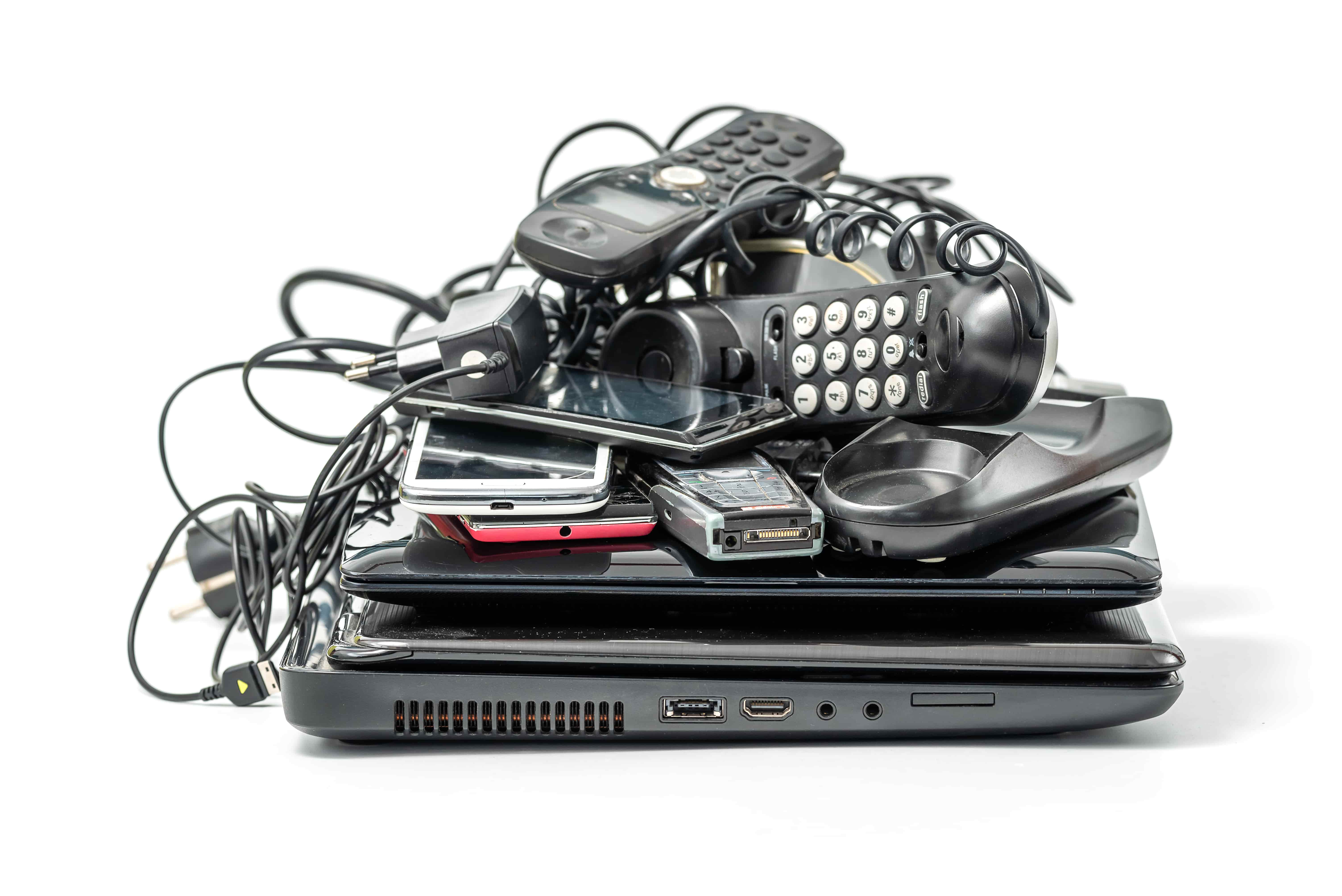
Got a garage full of broken laptops, a kitchen drawer stuffed with dead phone chargers, or a spare room that's slowly becoming a graveyard for old TVs and desktop computers? You're not alone. Londoners generate millions of tonnes of electrical waste every year — and most of it is being disposed of incorrectly.
The problem isn't laziness. It's confusion. The rules around electronic waste (known as WEEE — Waste Electrical and Electronic Equipment) are specific, legally binding, and often misunderstood. Toss a broken washing machine in a skip without declaring it as WEEE, and you could be breaking the law. Dump a bag of old cables on the pavement, and you're looking at a potential fly-tipping fine.
This guide cuts through the noise. Whether you're a London homeowner clearing out the loft, a landlord between tenancies, or a business disposing of old office equipment, here is everything you need to know about legal, responsible, and hassle-free electrical junk removal in London.
Quick Answer: How Do You Dispose of Old Electronics in London?
If you need the fastest compliant route, use this order:
- Reuse or donate working items
- Use your borough HWRC for free resident drop-off
- Use retailer or manufacturer take-back for like-for-like replacements
- Use a licensed WEEE collection service for bulky, mixed, or urgent loads
For bulky electrical items, business equipment, or same-day bookings, a licensed specialist service is usually the safest and quickest option.
What Is WEEE and Why Does It Matter?
WEEE stands for Waste Electrical and Electronic Equipment. It refers to any item that runs on electricity or has a battery — and has reached the end of its useful life.
Under the UK WEEE Regulations 2013, electrical and electronic waste must be disposed of separately from general household or commercial waste. This legislation was retained post-Brexit and continues to apply across England, Scotland, Wales, and Northern Ireland.
Why Is WEEE Treated Differently?
Electronics contain a complex mix of materials — some valuable, many hazardous:
- Valuable materials: Gold, silver, copper, palladium, and rare earth metals that can be recovered and reused
- Hazardous materials: Lead, mercury, cadmium, brominated flame retardants, and lithium (in batteries)
When electronics end up in landfill, these substances leach into soil and groundwater. When incinerated improperly, they release toxic gases. Proper WEEE recycling prevents environmental damage and recovers materials that reduce the need for mining.
Key Fact: The UK generated approximately 1.45 million tonnes of e-waste in 2023, making it one of the highest per-capita producers in Europe. Only a fraction of this is formally recycled through approved channels.
What Counts as WEEE? A Full Category Breakdown
Not sure if your item qualifies as WEEE? Here's a comprehensive reference table:
| WEEE Category | Examples |
|---|---|
| Large household appliances | Washing machines, fridges, dishwashers, ovens, air conditioning units |
| Small household appliances | Toasters, kettles, microwaves, irons, hair dryers, vacuum cleaners |
| IT and telecommunications | Laptops, desktop computers, monitors, printers, phones, tablets, routers |
| Consumer electronics | TVs, stereos, DVD players, games consoles, speakers |
| Lighting equipment | Fluorescent tubes, LED bulbs, energy-saving bulbs |
| Electrical and electronic tools | Drills, saws, sewing machines, gardening tools with motors |
| Toys and leisure equipment | Electric toys, treadmills, slot machines |
| Medical devices | Blood pressure monitors, diagnostic equipment (non-implantable) |
| Monitoring instruments | Smoke detectors, thermostats, control panels |
| Batteries and accumulators | All portable and vehicle batteries |
Rule of thumb: If it has a plug, battery, or power cable, it's almost certainly WEEE.
Your Options for Getting Rid of Electronics in London
How to Dispose of Electrical Waste in London: 5-Step Compliance Checklist
Use this checklist if you want a practical, legally safe process:
- Identify WEEE items and separate them from general waste
- Remove personal or business data from laptops, phones, and storage devices
- Choose the right channel (HWRC, retailer take-back, manufacturer programme, or licensed collection)
- Keep proof for business waste (Waste Transfer Note and carrier details)
- Confirm approved treatment via licensed WEEE recycling facilities
This workflow helps households avoid penalties and helps businesses meet duty-of-care obligations.
1. London Borough Household Waste Recycling Centres (HWRCs)
Every London borough operates at least one Household Waste Recycling Centre (HWRC) — commonly known as a "tip" or "dump." All HWRCs accept WEEE items free of charge for residents.
What you need to know:
- Bring proof of residence (a utility bill or driving licence) if required by your borough
- Some HWRCs have restrictions on van or commercial vehicle access — check ahead
- Large appliances like washing machines and fridges are accepted
- Opening hours vary; most are closed on Christmas Day and some bank holidays
London HWRC locations include:
- Smugglers Way Reuse & Recycling Centre — Wandsworth, SW18
- Old Oak Common Lane — Hammersmith and Fulham, W3
- Hendon — Barnet, NW4
- Hornsey Street — Islington (operated by North London Waste Authority)
- Cringle Dock — Lambeth, SW8
Search your borough council's website for your nearest HWRC with current operating hours.
2. Retailer Take-Back Schemes
Under the UK WEEE Regulations, retailers who sell electrical goods are legally required to offer take-back facilities. This applies to large retailers selling more than 400 square metres of electrical products.
- In-store drop-off: Many retailers (Currys, Argos, John Lewis, B&Q) accept old electricals in-store
- Like-for-like swap: When you buy a new appliance, the retailer must take the old equivalent away for free
- Online retailers: Must offer a postal return or collection service for small WEEE items
Pro Tip: If you're buying a new washing machine from a London retailer and having it delivered, always request the old machine is taken away at the same time. It's your legal right, and it costs you nothing.
3. Charity Shops and Reuse Schemes
If your electronics still work, donation is always the most sustainable option.
- Emmaus UK — Accepts working electrical items and refurbishes them for resale
- Computer Aid International — Collects working computers and laptops for redistribution
- Age UK and British Heart Foundation — Accept working small appliances
- London Community RePaint — Focus on tools and DIY equipment
Important: Charities cannot accept items that don't work or haven't been PAT tested. Always check before dropping off.
4. Manufacturer Take-Back Programmes
Many major electronics manufacturers now operate their own collection or trade-in schemes:
- Apple: Free recycling through Apple stores or mail-in
- Samsung: GreenDot recycling programme
- HP: Planet Partners programme for printers and ink cartridges
- Dell: Free recycling for any brand via Reconomy partnership
These are particularly useful for IT equipment where data security is also a concern.
5. Professional Electronic Waste Removal Services in London
For larger clearances — or when time, access, or volume makes self-transport impractical — a professional junk removal service is often the smartest choice.
This is especially relevant when you're dealing with:
- Multiple large appliances (fridges, washing machines, TVs)
- Business or office clearances with bulk IT equipment
- End-of-tenancy clearances with mixed waste including electricals
- Properties where no vehicle access is available
- Urgent or same-day clearance requirements
A reputable London junk removal company will collect your electrical waste, ensure it is separated correctly, and deliver it to licensed WEEE recycling facilities — keeping you fully compliant.
Get a free, no-obligation quote for electrical waste removal in London
Disposing of Specific Electrical Items: What You Need to Know
Old Fridges and Freezers
Fridges and freezers contain refrigerant gases (HFCs and HCFCs) that are potent greenhouse gases. These must be handled by certified engineers — you cannot simply dump a fridge, even at a tip, without it being properly degassed first. HWRCs accept fridges and will arrange degassing.
Televisions and Monitors
Older CRT televisions and monitors contain lead and phosphor compounds. Flat-screen TVs may contain mercury in their backlights. Both must go through WEEE channels — never general waste.
Laptops, Tablets, and Phones
Data security is as important as environmental compliance here. Before disposing of any device:
- Back up all important data
- Perform a factory reset
- For added security, use data-wiping software (e.g., DBAN, Eraser)
- Consider physical destruction for sensitive business data
Only then should the device enter the WEEE stream.
Batteries
Batteries are classified separately under the UK Battery Regulations but follow similar disposal rules. Never put batteries in general waste or recycling bins — they can cause fires in waste trucks. Drop them at:
- Supermarkets (most have battery collection points near the entrance)
- Electronics retailers
- HWRCs
Fluorescent and Energy-Saving Bulbs
These contain small amounts of mercury and must not go in general recycling. Most HWRCs accept them, and many larger supermarkets have dedicated collection points.
What Businesses Must Do: WEEE Compliance for London Companies
If you run a business in London, the rules are stricter. The UK WEEE Regulations 2013 place specific legal obligations on businesses as both producers and disposers of electrical waste.
Key Business Obligations
| Obligation | Detail |
|---|---|
| Separate WEEE at source | Business WEEE cannot be mixed with general commercial waste |
| Use authorised waste carriers | Only use licensed waste carriers registered with the Environment Agency |
| Obtain a Waste Transfer Note | Required for every legal transfer of waste — keep for 3 years |
| Register with a Producer Compliance Scheme | Required if you manufacture or import electrical goods |
| Arrange approved treatment | WEEE must go to an Authorised Treatment Facility (ATF) |
Penalties for non-compliance: Businesses that dispose of WEEE illegally face fines of up to £5,000 in a Magistrates' Court, and potentially unlimited fines in a Crown Court for serious offences.
Always ask your waste removal provider for a Waste Transfer Note and Environment Agency licence number before proceeding with any business e-waste collection.
For relocation, refurbishment, or end-of-lease clear-outs, see our office clearance London service for compliant collection planning.
How to Choose a Legitimate WEEE Removal Company in London
Not all junk removal services are created equal. Here's what to check before booking:
✅ Compliance Checklist
- Registered waste carrier with the Environment Agency (check at the public register)
- Can provide a Waste Transfer Note upon collection
- Uses licensed Authorised Treatment Facilities (ATFs) for WEEE disposal
- Transparent pricing with no hidden charges
- Clear process for data-bearing devices
- Positive reviews from London customers
- Same-day or next-day availability for urgent clearances
- Covers your specific London postcode
Common Mistakes Londoners Make With Electrical Waste
Avoid these costly and environmentally harmful errors:
❌ Putting electronics in the general recycling bin — They won't be recycled and can damage sorting machinery
❌ Leaving electrical items on the pavement — This is fly-tipping and carries fines of up to £400
❌ Dumping electricals in a skip without declaring them — Skips are not WEEE-compliant unless specifically arranged
❌ Selling or donating non-working items — Without PAT testing, this creates liability
❌ Disposing of business WEEE through residential channels — This is a separate legal violation
❌ Forgetting to wipe data — Personal and business data on discarded devices is a serious GDPR risk
The Cost of Electrical Waste Removal in London
Pricing varies depending on volume, item type, and service level:
| Service Type | Approximate Cost |
|---|---|
| HWRC drop-off (self-transport) | Free for residents |
| Single-item retailer collection | Free when buying replacement |
| Charity collection (working items) | Free |
| Professional single-item collection (e.g., TV) | £40–£80 |
| Small van load (mixed electricals) | £100–£180 |
| Full van load (office clearance, bulk WEEE) | £200–£400+ |
| Same-day or emergency collection | +20–30% premium |
Note: Fridges and items containing refrigerants may carry an additional handling surcharge due to specialist disposal requirements.
If your clearance cannot wait, same-day collection can help with urgent electrical clearances.
Key Takeaways
- WEEE (Waste Electrical and Electronic Equipment) covers any item powered by electricity or batteries — from phones to washing machines
- Disposing of WEEE incorrectly is illegal in the UK and carries significant fines for both individuals and businesses
- London residents can use free HWRC drop-off points, retailer take-back schemes, or charity donation for working items
- Businesses must use licensed waste carriers, obtain Waste Transfer Notes, and use Authorised Treatment Facilities
- Always wipe data from devices before disposal
- For large volumes or urgent clearances, a professional London junk removal service is the most practical and compliant solution
- Never put electronics in general waste, general recycling, or leave them on the pavement
Frequently Asked Questions
What does WEEE stand for?
WEEE stands for Waste Electrical and Electronic Equipment. It refers to the legal category of waste covering all discarded items that run on electricity or contain a battery.
Can I put old electronics in my London recycling bin?
No. Electronics must not be placed in household recycling bins. They require separate disposal through an HWRC, retailer take-back scheme, or licensed collection service.
Is it illegal to throw away electronics in London?
Yes. Under the UK WEEE Regulations 2013, it is illegal to dispose of electrical items as general waste or leave them as fly-tipping. Fines can reach £400 for individuals and significantly more for businesses.
How do I dispose of an old TV in London?
You can take it to your nearest HWRC for free, ask the retailer to take it when you buy a replacement, or book a professional collection service. Never put a TV in general waste.
Do London businesses need special documentation for WEEE disposal?
Yes. Businesses must use a licensed waste carrier registered with the Environment Agency, obtain a Waste Transfer Note for every collection, and ensure WEEE goes to an Authorised Treatment Facility (ATF).
How much does electrical waste collection cost in London?
Costs range from free (HWRC or retailer take-back) to £40–£400+ for professional collection, depending on volume and item types.
Can I put batteries in my London recycling bin?
No. Batteries must be taken to a dedicated battery collection point (found at most supermarkets and HWRCs) or included with WEEE collections. They pose a fire risk in general waste streams.
What should I do with a broken laptop before disposing of it?
Back up your data, perform a factory reset, use data-wiping software for extra security, and then recycle it through an HWRC, manufacturer take-back scheme, or professional WEEE collection service.
How do I find a legitimate WEEE collection company in London?
Check that the company is registered as a waste carrier with the Environment Agency (searchable on their public register), can provide a Waste Transfer Note, and uses licensed Authorised Treatment Facilities.
Need Help With Electrical Junk Removal in London?
Clearing electrical waste shouldn't be stressful. Whether you've got a single broken TV or an entire office worth of old IT equipment, our team provides fast, fully licensed electrical waste collection across all London boroughs — with same-day and next-day availability.
We handle all the heavy lifting, ensure your items go to approved WEEE recycling facilities, and provide full documentation for business clients.
Homeowners clearing mixed household clutter with electrical items can also review our house clearance services and same-day junk removal.
For more information on responsible junk clearance in London, explore our related service pages above to choose the right collection route for your property and waste type.